Timeless Design in Israel: Creating Homes That Work for Every Stage of Life


When people hear the phrase “aging in place,” they often imagine homes designed specifically for older adults or people with mobility challenges. In reality, many of the design principles associated with aging in place simply create better homes for everyone.
In Israel, where homes are often smaller, families grow quickly, and many people plan to stay in their apartments for decades, thoughtful design becomes even more important. Apartments must adapt to changing family needs, visiting relatives from abroad, children growing up, and sometimes even working from home.
A well-designed home should support life as it evolves. Rather than renovating again and again as needs change, careful planning can create a home that remains comfortable, functional, and beautiful for many years.
This approach is often called universal design or timeless design. Instead of reacting to future limitations, the goal is to create spaces that are intuitive, flexible, and easy to use from the beginning.
Below are several design principles that help Israeli homes function better for everyday life.
1. Comfortable Walkways and Doorways
In many Israeli apartments, circulation space can feel tight. Thoughtful planning of walkways, doorways, and furniture placement can dramatically improve how a home functions.
Wider pathways make it easier to move through the home while carrying groceries, pushing a stroller, or navigating around children and guests. In kitchens, slightly wider aisles between counters and islands allow more than one person to cook comfortably, something especially important in homes where family life centers around the kitchen.
Even small adjustments to layout can make a home feel calmer and easier to live in.
2. Minimizing Level Changes
Steps and small level changes are common in some older Israeli apartments, particularly between bathrooms, balconies, or additions built over time.
Reducing unnecessary steps improves safety and makes movement through the home more comfortable for everyone. Ideally, the main daily spaces, kitchen, living area, bedroom, and bathroom, should be easy to access without obstacles.
In apartments with multiple levels, ensuring that one level can function independently with a bedroom and bathroom provides long-term flexibility.
3. Curbless Showers
Curbless showers are becoming increasingly popular in Israeli bathroom renovations. By removing the raised edge at the entrance of the shower, the bathroom floor flows smoothly into the shower area.
This creates a cleaner visual appearance, makes the bathroom feel larger, and reduces tripping hazards. It also allows for easier access if mobility needs change in the future.
With proper waterproofing and drainage, curbless showers can work beautifully even in small Israeli bathrooms.
4. Planning for Future Support Features
During renovations, it is possible to prepare bathroom walls for future safety features without affecting the current design.
By adding structural reinforcement inside the walls, grab bars can be installed later if needed. Today, many support bars are designed to blend with bathroom hardware and can even double as towel bars.
Planning for this during construction is simple and inexpensive, but it can make a significant difference later.
5. Shower Seating
A built-in bench or a movable shower stool can add flexibility to a bathroom.
Even for people who do not need to sit while showering, a bench is useful for bathing young children, shaving, or simply creating a more comfortable, spa-like experience.
In Israel, where bathrooms are often compact, a thoughtfully designed corner bench can add comfort without taking up valuable space.
6. Handheld Shower Heads
Handheld shower sprayers add versatility to any bathroom. They make it easier to wash children, clean the shower, or direct water where it is needed.
Mounted on an adjustable slide bar, the shower head can easily accommodate users of different heights.
This simple feature adds flexibility without changing the overall design of the bathroom.
7. Slip-Resistant Flooring
Floors with good traction reduce the risk of slipping, particularly in bathrooms, kitchens, and entryways.
Matte finishes, lightly textured tiles, and smaller tiles with more grout lines often provide better grip than highly polished surfaces. These choices can still look elegant while making the home safer and more comfortable to move through.
8. Reducing Bending and Reaching
Thoughtful storage design can make daily life much easier.
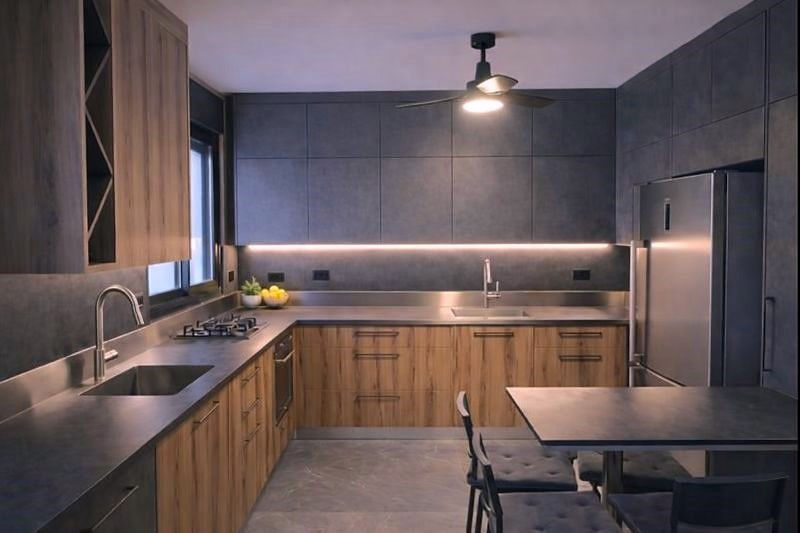
In kitchens, drawers are often more practical than deep cabinets because items are easier to see and reach. Pull-out shelves, corner solutions, and wall ovens placed at comfortable heights reduce unnecessary bending.
These decisions make cooking and everyday tasks more comfortable for everyone, not just as people get older.
9. Layered Lighting
Lighting plays an important role in both comfort and safety.
Many Israeli homes rely on a single ceiling light in each room. Adding layers of lighting, ambient lighting, task lighting, and accent lighting, creates a much more comfortable environment.
Under-cabinet lighting in kitchens, reading lights near seating areas, and soft night lighting in hallways can make the home easier to navigate after dark while also improving the overall atmosphere.
10. Easy-to-Use Hardware
Small design decisions can have a big impact on usability.
Lever-style faucets, comfortable cabinet handles and knobs placed intuitively correct for opening doors and drawers are easier to use for people of all ages. These details improve daily convenience while still maintaining a refined and modern aesthetic.
Designing Homes That Last
Timeless design is not about preparing for decline or injury. It is about designing homes that support real life.
In Israel, where many people hope to stay in their homes for years and renovations can be complex and expensive, thoughtful planning from the start is especially valuable.
When homes are designed with flexibility, safety, and smart ergonomics, they remain comfortable and functional through many stages of life.
A well-designed home should not only look beautiful when the renovation is finished. It should continue to work beautifully for the people who live in it for decades to come.


Comments